
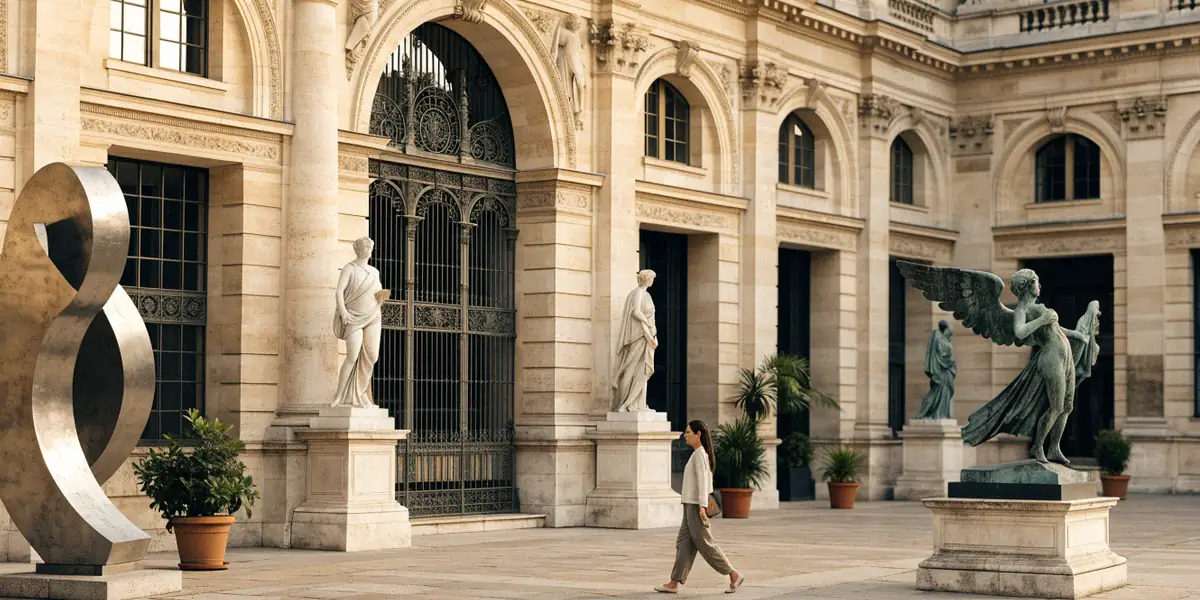
Paris Culture Guide: Art, Museums and Etiquette for Australian Travellers
We still remember the first time our team stood in front of the Mona Lisa. After years of seeing her reproduced on mugs, tote bags and T-shirts, the real thing was smaller than we expected, glowing behind protective glass, surrounded by a sea of raised smartphones. We felt awe, certainly, but also a quiet panic: were we doing this right? Were we missing the good stuff? Should we have booked tickets months earlier? That moment of confusion is exactly why we built this guide. If you’re an Australian traveller planning your first (or fifth) trip to Paris, here’s everything we wish we’d known about the city’s art, museums and unspoken rules.
Navigating Paris’s Art Museums: Louvre Tips and Beyond
Paris has more than 130 museums, which is thrilling and slightly overwhelming in equal measure. The good news is that a little planning goes a long way. Our golden rule is simple: book timed tickets online before you leave Australia, and never, ever turn up at the pyramid entrance at 10am on a Saturday.
Louvre Tips: Beating the Crowds and Seeing the Essentials
The Louvre welcomes close to nine million visitors a year, so strategy matters. Book a timed entry slot on the official website, then skip the main pyramid queue entirely by entering via the Porte des Lions entrance on the museum’s southern side — it’s far quieter and puts you close to the French paintings. If your schedule allows, visit on a Wednesday or Friday evening, when the museum stays open late and the crowds thin dramatically.
Once inside, resist the urge to see everything. The Louvre is enormous, and trying to “do” it in one day is a recipe for exhaustion. We suggest picking three wings and doing them properly.
- Denon Wing: the Mona Lisa, Winged Victory of Samothrace and French large-format paintings
- Sully Wing: ancient Egypt, the medieval Louvre foundations and Venus de Milo
- Richelieu Wing: Mesopotamian treasures and the Marly and Puget courtyards
Musée d’Orsay: The Impressionist Paradise
Housed in a stunning Beaux-Arts railway station on the Left Bank, the Musée d’Orsay is where Impressionism truly comes alive. This is the collection to prioritise if you love Monet, Degas, Renoir, Van Gogh or Cézanne. The fifth-floor Impressionist galleries are the highlight, with Degas’s delicate ballet dancers and Monet’s shimmering landscapes. Visit on a Thursday evening for the quietest experience, and buy your ticket online to avoid the outdoor queue along the Seine.
Smaller Gems: Rodin Museum and Musée de l’Orangerie
Two smaller museums deserve a place on every itinerary. The Musée Rodin, set in a graceful 18th-century mansion with a sculpture garden, lets you wander among The Thinker and The Kiss in the open air — a lovely, unhurried contrast to the big institutions. Meanwhile, the Musée de l’Orangerie in the Tuileries Gardens houses Monet’s Water Lilies in two oval rooms designed specifically for them. Standing in that soft, natural light is one of the most peaceful experiences Paris offers.
A Crash Course in French Art History for Curious Travellers
You don’t need a degree to enjoy French art, but a little context makes everything richer. Here’s our whistle-stop tour of the movements that shaped the collections you’ll be wandering through.
From Gothic to Baroque: The Foundations
French art history arguably begins with the great Gothic cathedrals — Chartres, Notre-Dame, Reims — where soaring arches and stained glass told stories to a largely illiterate population. The Renaissance followed, bringing Italian influence and royal patronage, before the Baroque and Rococo periods delivered the ornate, theatrical style you’ll see at Versailles. Romanticism then swept in with Delacroix’s dramatic colours and emotional intensity, while Realism, led by Courbet, turned the spotlight on ordinary working life.
Impressionism and Post-Impressionism: A Revolution
In the 1870s, a group of painters rejected the stuffy official Salon and took their easels outdoors. Monet painted light itself, chasing the same haystack through every hour of the day. Degas captured dancers mid-stretch. Renoir celebrated everyday joy. Rodin, working in bronze and marble, brought a new psychological depth to sculpture. Their successors — the Post-Impressionists like Van Gogh, Gauguin and Cézanne — pushed further still, laying the groundwork for everything modern that followed.
Modern and Contemporary Art at Centre Pompidou
For the 20th century onwards, head to the Centre Pompidou, the famously “inside-out” building with its colourful exposed pipes. Its collection covers Fauvism, Cubism, Surrealism and contemporary installations, with works by Matisse, Picasso, Kandinsky and Duchamp. It’s a bracing contrast to the classical museums, and the rooftop view over Paris is worth the lift ride alone.
French Etiquette for Australians: Dos and Don’ts in Paris
Australians are famously relaxed and friendly, which generally serves us well abroad. In Paris, though, a few small adjustments will transform how you’re treated. None of this is about being formal for its own sake — it’s simply how respect is shown here.
Greetings and Politeness: The Magic of ‘Bonjour’
Always say “bonjour” before asking a question, whether you’re entering a bakery, approaching a museum attendant or asking for directions. Skipping this greeting is the single most common mistake visitors make, and it reads as rude. A cheerful “bonjour, excusez-moi” opens doors that would otherwise stay firmly shut. In the evening, switch to “bonsoir”.
You’ll also encounter “faire la bise” — the cheek-kiss greeting exchanged between friends and colleagues. As a visitor, you won’t be expected to initiate it, but a light handshake in professional settings is always appropriate.
Museum and Dining Etiquette: What to Avoid
Inside museums, keep your voice low and your phone on silent. Flash photography is banned in most galleries, and selfie sticks are prohibited at the Louvre and Orsay. When dining, never rush a meal — lunch is a leisurely affair, and waiters won’t bring the bill until you ask. Rushing is considered slightly barbaric, so settle in and enjoy the ritual.
Tipping and Service: What Australians Should Know
Here’s a relief for Aussie travellers: tipping is not expected the way it is in Australia for certain services, because French service charges are legally included in the bill. Leaving a euro or two for excellent service is a nice gesture, but there’s no obligation to calculate a percentage. Similarly, don’t expect the effusive, chatty service style common back home — professional distance is simply the French way.
Practical Tips for Australian Travellers: Flights, SIM Cards and More
Getting There: Flights from Sydney and Melbourne
Direct flights from Sydney and Melbourne to Paris are available with Qantas and Air France, which makes the journey far less gruelling than a multi-stop routing. Expect roughly 23 to 24 hours in the air, so plan a gentle first day in the city rather than booking a museum marathon on arrival.
Staying Connected: SIM Cards and Wi-Fi
We recommend picking up an Orange Holiday SIM card on arrival at Charles de Gaulle Airport. It offers generous data and calls across France and Europe, and it’s far cheaper than most Australian roaming plans. Free Wi-Fi is widely available in museums, cafés and on the metro, but having reliable data makes navigation and translation apps much easier.
Getting Around: Metro, Museum Pass and Navigo Easy
Paris’s metro is fast, cheap and comprehensive. Buy a Navigo Easy card at any station ticket machine, load it with single rides or a day pass, and tap your way around the city. For museums, the Paris Museum Pass offers skip-the-line entry to over 50 museums and monuments, including the Louvre, Orsay and Versailles — excellent value if you’re planning several visits.
Finally, save the Australian Embassy in Paris details in your phone for consular assistance in an emergency. It’s the kind of thing you hope never to need, but it’s reassuring to have.
FAQ
Do I need to book Louvre tickets in advance?
Yes, we strongly recommend it. Timed-entry tickets sell out during peak season, and booking online lets you skip the long pyramid queue. Enter via Porte des Lions for an even smoother arrival.
Is the Paris Museum Pass worth it for Australian travellers?
If you plan to visit three or more museums, absolutely. It covers skip-the-line entry to over 50 museums and monuments, saving both money and precious holiday time.
Do I need to tip in Paris restaurants?
No. Service is included by law in French restaurant bills. Rounding up or leaving a euro or two for great service is appreciated but never expected.
What’s the best SIM card for a trip to France?
We recommend the Orange Holiday SIM card, available at the airport. It provides reliable data and calls across France and Europe at a fraction of typical Australian roaming costs.
How do I get around Paris cheaply?
Grab a Navigo Easy card from any metro station and load it with single rides or a day pass. It’s the simplest, most affordable way to travel across the city.
With a little preparation, Paris rewards Australian travellers enormously — not just with its art, but with the pleasure of moving through the city confidently and respectfully. Book your tickets early, learn your “bonjour”, slow down at mealtimes, and you’ll find the whole experience far richer. Explore our detailed guides to the Louvre, Musée d’Orsay and French etiquette for even more insider advice before you fly.
Latest articles
- Mus?e d’Orsay: Impressionist highlights you can’t miss
 Musée d’Orsay: Impressionist Highlights You Can’t Miss You push through the entrance and the first thing that hits you isn’t a painting…
- Is the Paris Museum Pass worth it?
 Is the Paris Museum Pass Worth It? A Guide for Australian Travellers You’re sitting at your kitchen table in Sydney or Melbourne,…
- How to visit the Louvre without the crowds
 How to Visit the Louvre Without the Crowds: Our Expert Guide We still remember our first visit to the Louvre. We had…
- Gustave Courbet and Realism: understanding A Burial at Ornans
 Gustave Courbet and Realism: Understanding A Burial at Ornans When Gustave Courbet unveiled A Burial at Ornans at the 1850–1851 Paris Salon,…
- French Rococo art explained: from Watteau to Fragonard
 French Rococo Art Explained: From Watteau to Fragonard You push open a tall door in the Marais and step into a room…
- French etiquette 101: dining, greetings and tipping
 French Etiquette 101: Dining, Greetings and Tipping Picture this: we’re standing in a charming little boulangerie in the Marais, fresh off the…